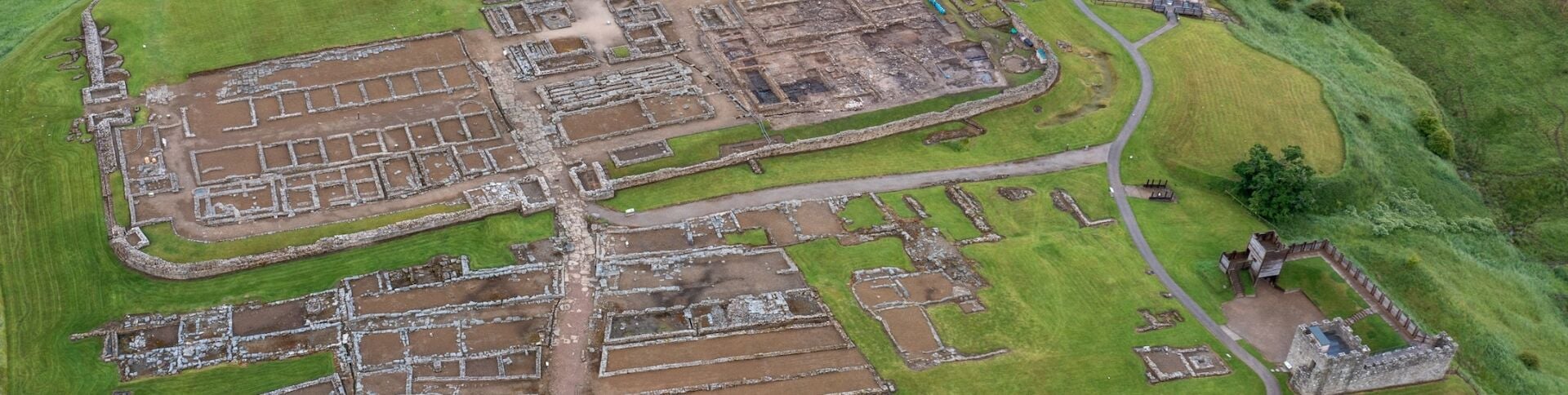
The pilot - delivered in partnership with the Vindolanda Trust, Kassandra, and the Hadrian’s Wall UNESCO World Heritage Site Partnership - is one of the first projects anywhere in the world to trial predictive AI tools within a UNESCO World Heritage Site.
Using millions of environmental data points gathered beneath the ground, the project is testing how artificial intelligence can help archaeologists and site managers understand where archaeology is most at risk - and support decisions about what to protect, excavate or prioritise before damage becomes irreversible.
The ITV coverage (both national and regional) forms part of growing national interest in how heritage sites are responding to climate change - not only through conservation, but by combining science, data, local knowledge and new digital tools to support long-term resilience.
Building on the pilot
Following the success of the Vindolanda trial, the UK National Commission for UNESCO is now working with the Hadrian’s Wall World Heritage Site Partnership to scope how this approach could be explored at other locations along the Wall, supporting a more joined-up understanding of climate risk across the wider landscape.
This work sits within the UKNC’s Climate Change and UNESCO Heritage (CCUH) programme, delivered in partnership with the Department for Culture, Media and Sport, which is bringing together climate projections, environmental monitoring, archaeological data and landscape-scale modelling across UNESCO sites in the UK.
Read the full story
You can read the full article explaining how the AI pilot works, the partnerships behind it, and what it could mean for the future of archaeological protection here:
👉 AI Set to Transform Archaeological Protection at Vindolanda Roman Fort