With Dr Rachel Sandford, I co-lead the UNESCO Chair in Sport, Physical Activity and Education for Development, established in early 2022 and based at Loughborough University. Over the past few weeks, there have been three notable highlights for the Chair.
Firstly, on 8 December, we were delighted to be advised by Maxim (Max) Polya-Vitry (the UK’s Deputy Permanent Delegate to UNESCO) that the UK had been re-elected for a further two-year term as Vice-Chair of UNESCO’s Intergovernmental Committee for Physical Education and Sport (CIGEPS). Rachel and I will represent the UK on CIGEPS as Vice-Chair, and we greatly appreciate the fantastic support and guidance of the UK Delegation led by the UK Ambassador, Anna Nsubuga, and Max. As the main committee across the United Nations system for developing and implementing policy and strategy in sport and PE, CIGEPS is an important forum to engage with. Its main work over the next few years will be to drive the development and roll out of Fit for Life, UNESCO’s flagship global initiative which seeks to inspire significant increases in sport and PE participation, policymaking, and investment. The UK has tremendous international standing (and, we might say, soft power) in sport and PE across the UNESCO system, so we have an outstanding opportunity here to contribute to shaping this vital programme and other policies in these areas.
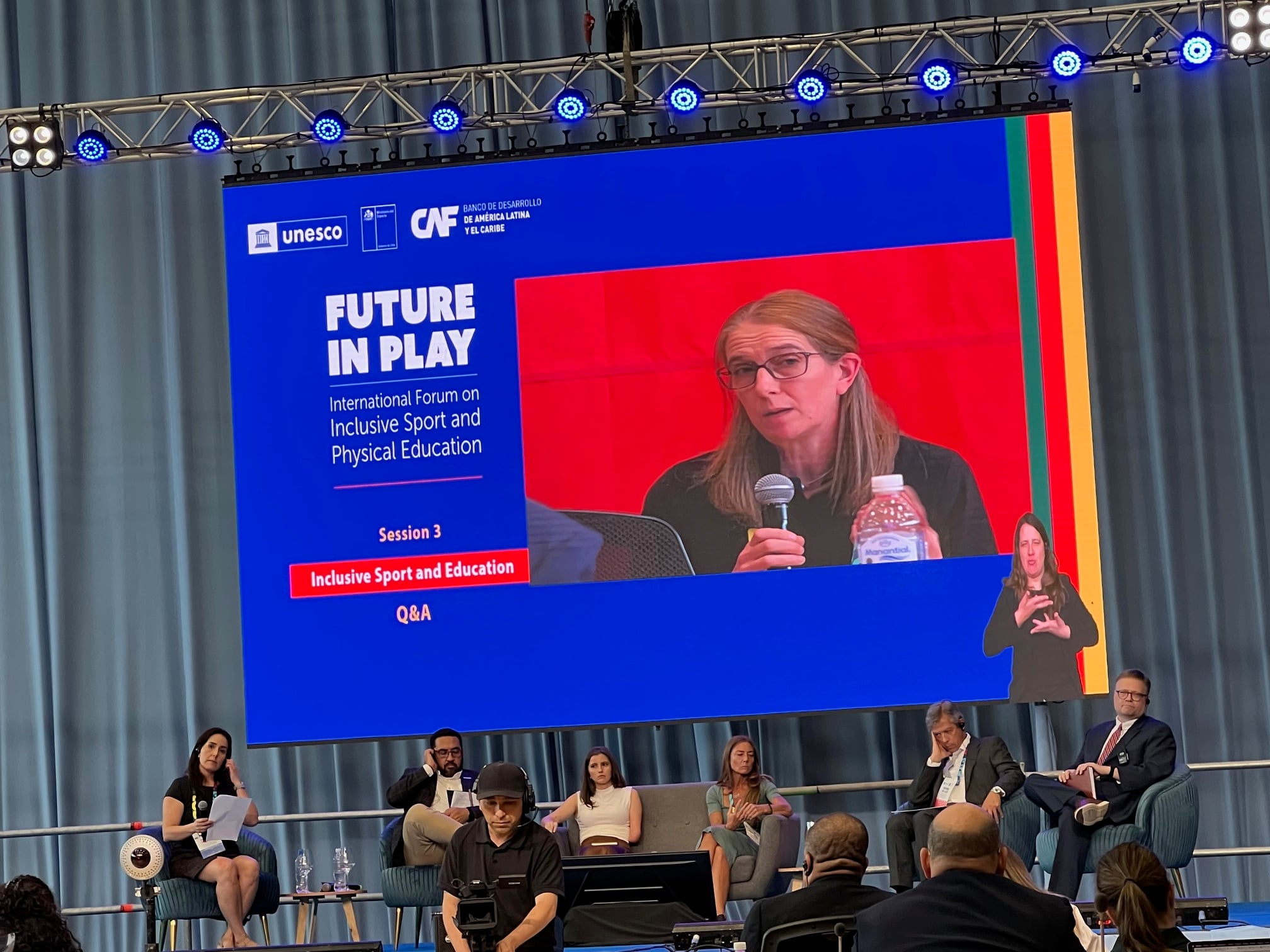
Secondly, the remarkable work of UNESCO’s Sport Section in developing the Fit for Life initiative was highlighted at the first edition of the high-level forum, ‘Future in Play: The International Forum on Inclusive Sport and Physical Education’, on 27-28 November. Rachel and I joined more than150 participants from over 35 countries, at the forum in Santiago, Chile, which was convened by UNESCO, the Ministry of Sport of Chile, and the Development Bank of Latin America and the Caribbean (CAF). The underpinning theme was how sport and physical education can offer inclusive, equitable, and safe environments that create opportunities for those on the margins, with a particular focus on girls and women and persons with disabilities. The event made clear that the Latin American and Caribbean region is becoming very active in the international sport and PE policy domain, and that, in the next stage of the Fit for Life initiative, UNESCO’s Sport Section are seeking to convert policy commitments by member states and other stakeholders into practical actions that deliver real change for the inclusion of people with disabilities in sport and PE. To that end, the forum launched the ‘Santiago Roadmap’, built on five pillars: better policies, more investment and research, stronger capacities and resources, pursuing intersectional approaches, and aligned educational and training pathways.