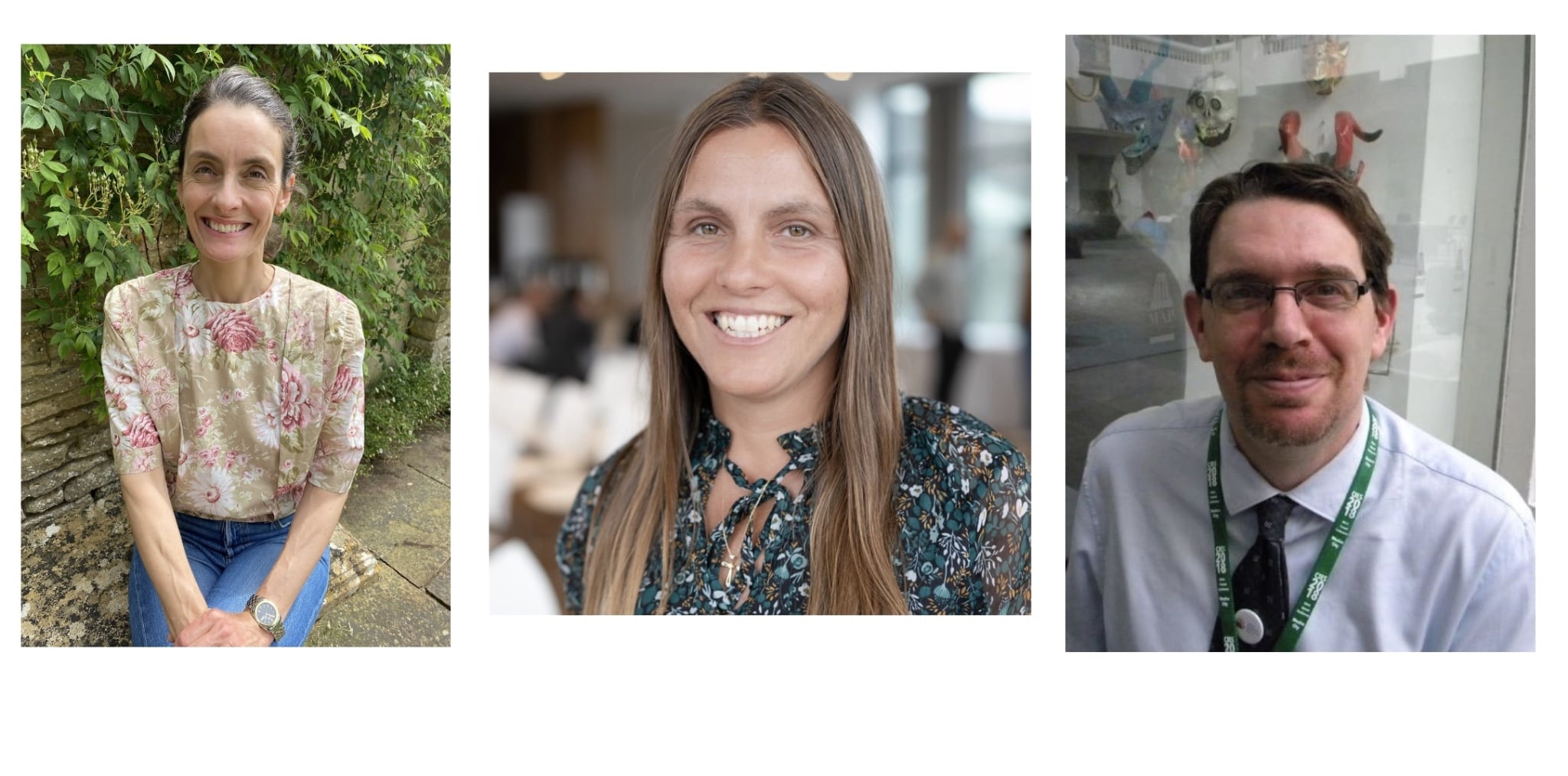
Laura Griffin, Dr William C. Smith, and Dr Vera Slavtcheva-Petkova join the UKNC’s Board of Directors at a critical moment, when rising geopolitical tensions, ecological breakdown, and rapid technological change are testing the foundations of international cooperation. Their appointments reflect the UK’s commitment to strengthening UNESCO’s work at a time when global challenges increasingly transcend borders, sectors and disciplines.
Their collective expertise will help ensure that the UK remains a principled, values-led partner within UNESCO, committed to advancing education, freedom of expression, global citizenship, sustainability and the rights and dignity of all people.
For 80 years, UNESCO has championed the belief that peace must be built on the “intellectual and moral solidarity of humanity.” The appointment of these three leading experts reflects the UK’s continued commitment to that founding vision, working globally and locally to strengthen dialogue, understanding, and equitable access to knowledge in an increasingly fragmented world.
Strengthening UK Leadership Across UNESCO’s Mandate
Laura Griffin, Non-Executive Director for Education, brings over twenty years in education as a teacher, researcher and curriculum developer, specialising in inquiry-based, participatory and action-oriented approaches to global citizenship and sustainability-related education. Having held positions in UK state and international schools, international organisations and specialised education agencies, Laura’s work contributes to learning and teaching that supports children's and young people’s engagement in local and global issues.
Upon her appointment, Laura Griffin, Non-Executive Director for Education, said:
"I am thrilled to be joining the UK National Commission for UNESCO board as a Non-Executive Director for Education. I’m very much looking forward to contributing my expertise to UNESCO’s important work in supporting education for peace, intercultural understanding and sustainability - and in imagining alternative possibilities for education together. I am especially interested in those alternative possibilities that acknowledge the multiplicity of ways of knowing, being and doing, and that embrace our entanglement in and with human and more-than-human worlds."
Dr William C. Smith, is a specialist in education and international development, with over 20 years of experience in teaching and researching education. Following his first career as a secondary teacher, he has held positions in civil society, international organisations, and academia. Currently, he works as the Director of Internationalisation and Senior Lecturer in Education and Development at Moray House School of Education and Sport, University of Edinburgh.
Upon his appointment, Dr William C. Smith, said:
“Education has an immense power for social mobility and the betterment of society. UNESCO, in its role as a global convenor and a proponent of the belief that education is a fundamental human right and a public good, is a global leader in promoting and supporting education for children and young people worldwide. I am delighted to support UNESCO and realise the value of education for all in my role as Non-Executive Director for Education. In the UK and around the world, all children have the right to benefit from an inclusive, equitable, and high-quality education.”
Dr Vera Slavtcheva-Petkova is a Reader in Global Journalism and Media, and Co-Director of DigiPol: The Centre for Digital Politics, Media and Society at the University of Liverpool. Vera’s expertise is in global journalism with a focus on journalists’ safety and journalism in Central and Eastern Europe, online political talk and post-deliberative public spheres, and young people, politics and the media. She is the Vice Chair of the Worlds of Journalism Study – the most extensive international comparative study in communication, which regularly assesses the state of journalism around the world through representative surveys with journalists in 75 countries. She also leads a one-stop platform on journalists’ safety – https://safetyofjournalists.org – an initiative of the University of Liverpool and the Worlds of Journalism Study in co-operation with UNESCO, which hosts a global safety index.
Upon her appointment, Dr Vera Slavtcheva-Petkova, said:
“Freedom of expression is a fundamental human right. Without freedom of expression, there is no democracy and we are all worse off for it. At a time of global democratic decline, growing inequalities worldwide and the expansion of powerful digital technologies, it is a huge privilege and responsibility for me to be joining the UK National Commission for UNESCO so we can work together on advancing the communication and information agenda. This will be a logical continuation of my nearly decade-long collaboration with UNESCO on journalists’ safety and the organisation of the academic conferences as part of World Press Freedom Day.”
Professor Anne Anderson, Chair of the UK National Commission for UNESCO, said:
“Leading in challenging times demands clarity of values, depth of expertise and a commitment to the founding ideals that have guided UNESCO for 80 years. Vera, Laura and Will bring extraordinary knowledge and global experience in their fields. Their leadership will help ensure that the UK remains a strong and principled voice within UNESCO, defending the rights to education, freedom of expression, knowledge, culture, and a sustainable future for all.”
A Commitment to UNESCO’s Mission at 80 Years
These appointments reinforce the UK’s long-standing commitment to UNESCO’s goals across all its programme areas:
education as a human right,
safeguarding freedom of expression and access to information,
strengthening global citizenship and sustainability,
and ensuring that knowledge, culture and science remain shared public goods.
Together, the new Non-Executive Directors will support the UKNC’s work across government, civil society, universities and UNESCO sites, helping ensure that the UK continues to uphold and advance UNESCO’s vision of peace through international cooperation.