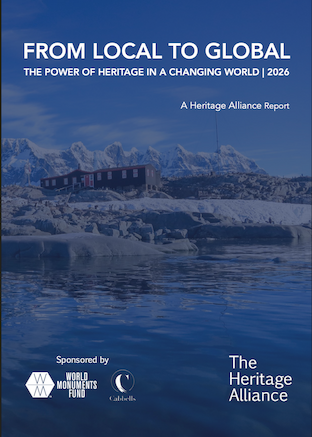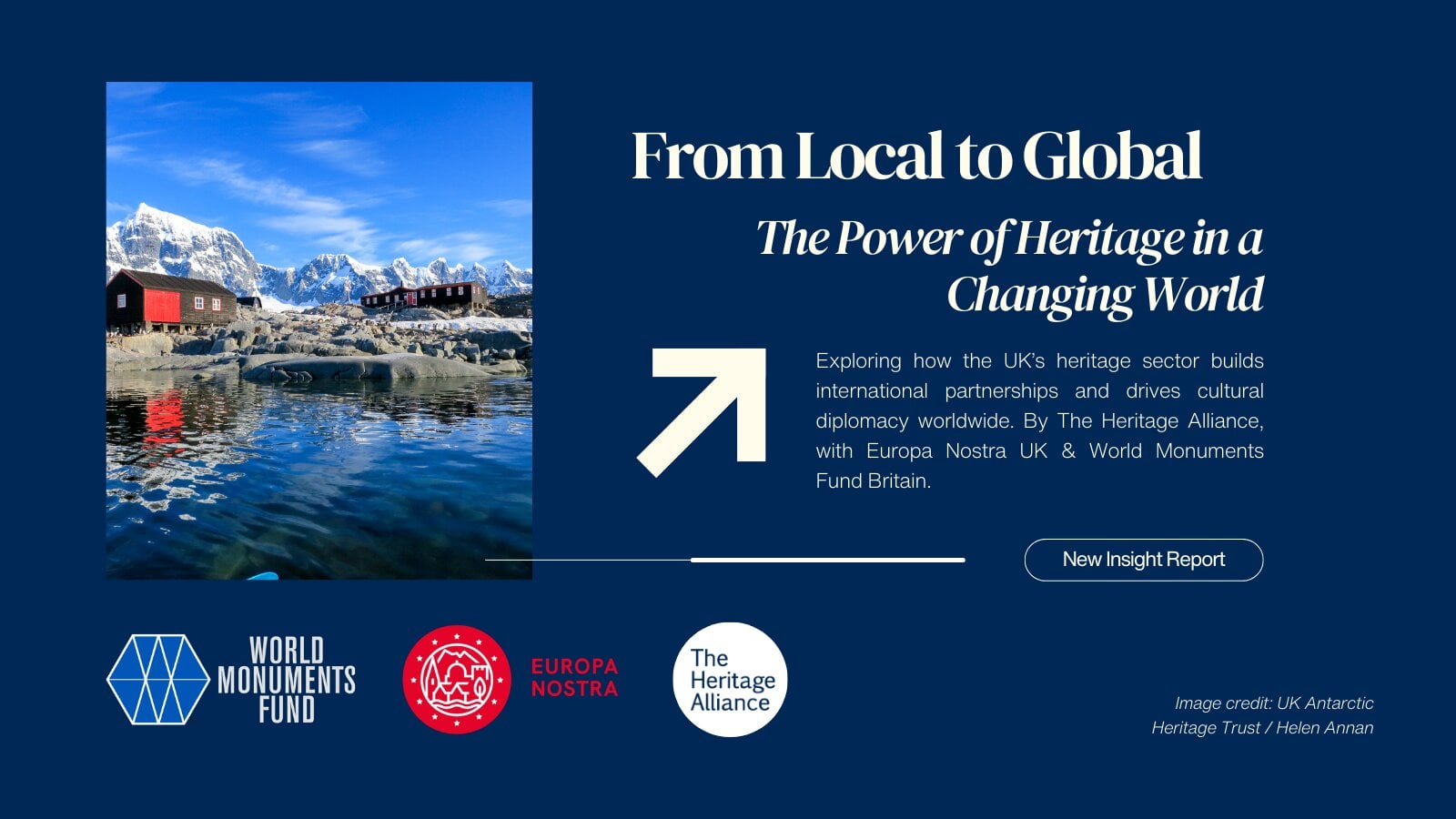
From Local to Global: The Power of Heritage in a Changing World, produced with Europa Nostra UK and supported by World Monuments Fund Britain, brings together over 30 case studies demonstrating how heritage organisations across the UK contribute to international partnerships, knowledge exchange and shared global challenges.
Among the featured examples is the work of the UK National Commission for UNESCO (UKNC), which connects the UK’s 60 UNESCO designations – including World Heritage Sites, Biosphere Reserves, Global Geoparks and Creative Cities – into a coordinated national network. These sites collectively cover around 15% of the UK’s land area and are home to approximately 9 million people, forming an important platform for collaboration across culture, science, heritage and sustainable development.
Over the past five years, UKNC has developed a series of programmes showing how UNESCO-designated sites can act as “living laboratories” for addressing global challenges such as climate change, sustainable tourism and community resilience.
Strengthening the UK UNESCO Network
A central strand of this work is the Local to Global programme, supported by the National Lottery Heritage Fund. The programme focuses on strengthening the UK’s land-based UNESCO designations by supporting governance, building capacity and enabling sites to collaborate more effectively with their communities and international partners.
Through workshops, shared tools and collaborative learning, Local to Global has helped sites articulate shared challenges and develop solutions grounded in local knowledge. This work has improved the resilience of the UK network while enabling sites to engage more confidently with partners across the global UNESCO system.
Complementing this work, the Scotland UNESCO Trail, developed in partnership with the Scottish Government and VisitScotland, has demonstrated how UNESCO designations can support sustainable tourism and place-based economic development. As the world’s first national UNESCO trail, it offers a model for how heritage can support inclusive visitor economies while reinforcing shared identity across diverse regions.
UNESCO Sites as Living Laboratories
The Climate Change and UNESCO Heritage (CCUH) Programme, funded through HM Treasury’s Shared Outcomes Fund, has further demonstrated how UNESCO sites can serve as real-world testbeds for addressing complex climate and heritage risks. Working across pilot sites in the UK, the programme developed open-source data tools, governance models and collaborative adaptation strategies designed to help communities respond to interconnected environmental and cultural challenges.
Alongside programme delivery, UKNC has also expanded the research infrastructure needed to sustain this work. A partnership with the Creative Industries Policy and Evidence Centre is developing new methodologies for understanding the financial and non-financial value created by UNESCO sites as multi-stakeholder partnerships.
Heritage as a Platform for Global Collaboration
Underlying these initiatives is a commitment to international collaboration grounded in partnership and shared learning. Through the UNESCO network, UK sites exchange knowledge on climate adaptation, cultural heritage management and community engagement with partners around the world.
Nushin Hussain, Project Implementation Manager for Local to Global at the UK National Commission for UNESCO, said:
“The From Local to Global report shows just how powerful heritage can be as a bridge between communities, countries and cultures. Through the Local to Global programme, funded by the National Lottery Heritage Fund, we are seeing first-hand how sharing knowledge, skills and experiences across borders strengthens both the UK heritage sector and our international partnerships, including through networks connected to UNESCO. By supporting our UNESCO-designated sites to connect and collaborate internationally, particularly through our Talkshops, the programme is helping build lasting relationships, encourage new ideas and strengthen international collaboration across the heritage sector.”
The report highlights how heritage organisations across the UK contribute to global cooperation through skills exchange, research collaboration and peer-to-peer partnerships, demonstrating the growing importance of heritage within wider discussions about the UK’s international engagement and soft power.