Key Information
Register:
NationalYear of Inscription:
2024Type of Heritage:
CollectionNominating Institution:
The Crichton Royal InstitutionLink to Website:
wellcomecollection.org/works/utmcnmq8
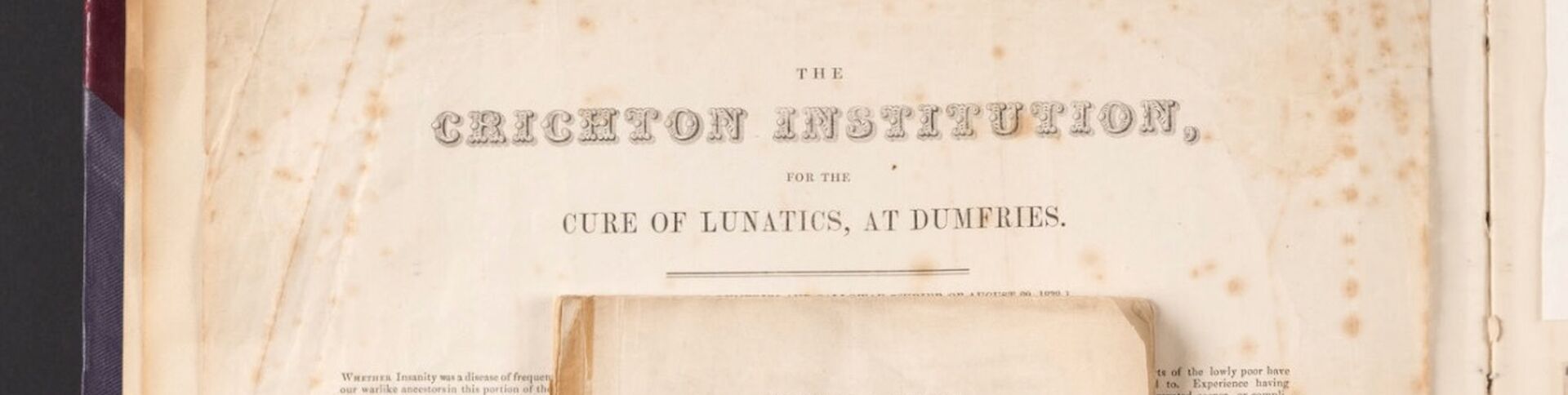
The Crichton Royal Institution was a pioneering asylum serving private and charitably funded patients, making its first admission in 1839. The Crichton Royal Institution adopted a patient-centred approach providing an innovative, holistic regime of creative therapy using art, literature, music and drama.
The Crichton Royal Institution was an innovative asylum, founded in 1838 by Elizabeth Cricthton. The purpose-built asylum served private and charitably funded patients, making its first admission in 1839. Situated on a rural estate outside Dumfries in Southwest Scotland, it gained Royal status in 1840 and became part of the NHS in 1948.
The Crichton Royal Institution was unique in its approach of patient centred care. The combination of creative therapeutic methods and occupational therapy, in addition to medical treatment, was led by the first Physician Superintendent Dr W.A.F. Browne and continued through the tenure of Physician Superintendent Dr James Gilchrist.
The Crichton Royal Institution archive collection dates from 1823 – 2008 and contains records created by patients, staff and administrators including: medical records, annual reports, inspection records, photographs, patient artwork, publications, ephemera of events and sports, maps, plans, ledgers, and some objects.
The Crichton Royal Institution and Creative Therapy collection, comprises multiple documents. Three record sets have been selected from the collection, which together, provide a coherent narrative of lived experiences of patients and staff, the running of the institution and the asylums pioneering and influential approach to mental health care. The records provide representation for a varied demographic of patients from a full range of economic backgrounds.
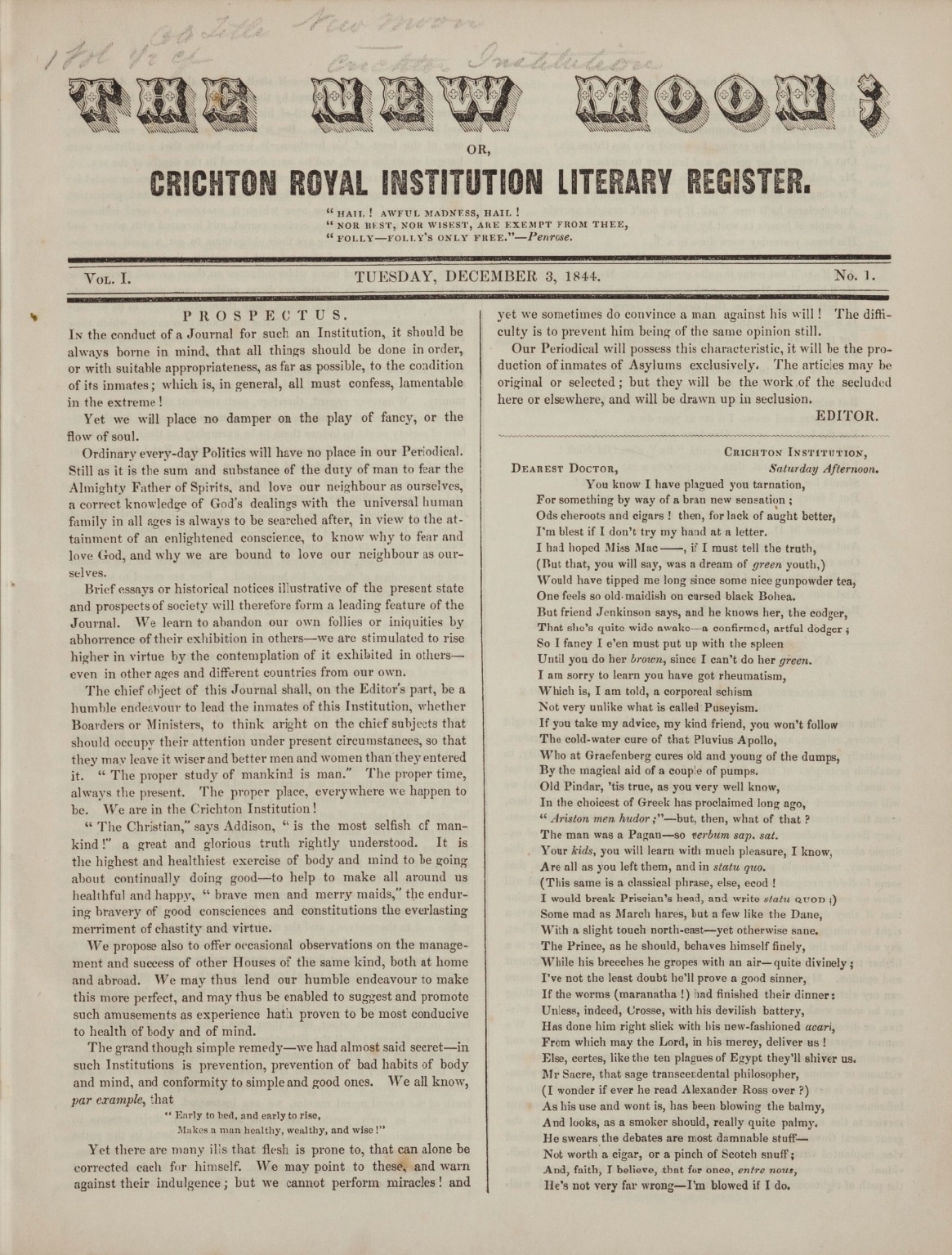
The New Moon Magazine 1844 – 1857 (630 pp)
The New Moon was the first longest-running asylum magazine published, over a substantial period of time, to be written and printed by patients.
The Physician Superintendent, Dr WF Browne noted that its intention was to give patients: ‘a vehicle for the free and undisguised feelings and views […] whether erroneous or not’. It provided an outlet for expression within a safe space to develop agency.
The magazine demonstrates the Crichton’s therapeutic regime from the patients’ perspectives: from reviews to translations to new poetry and song.
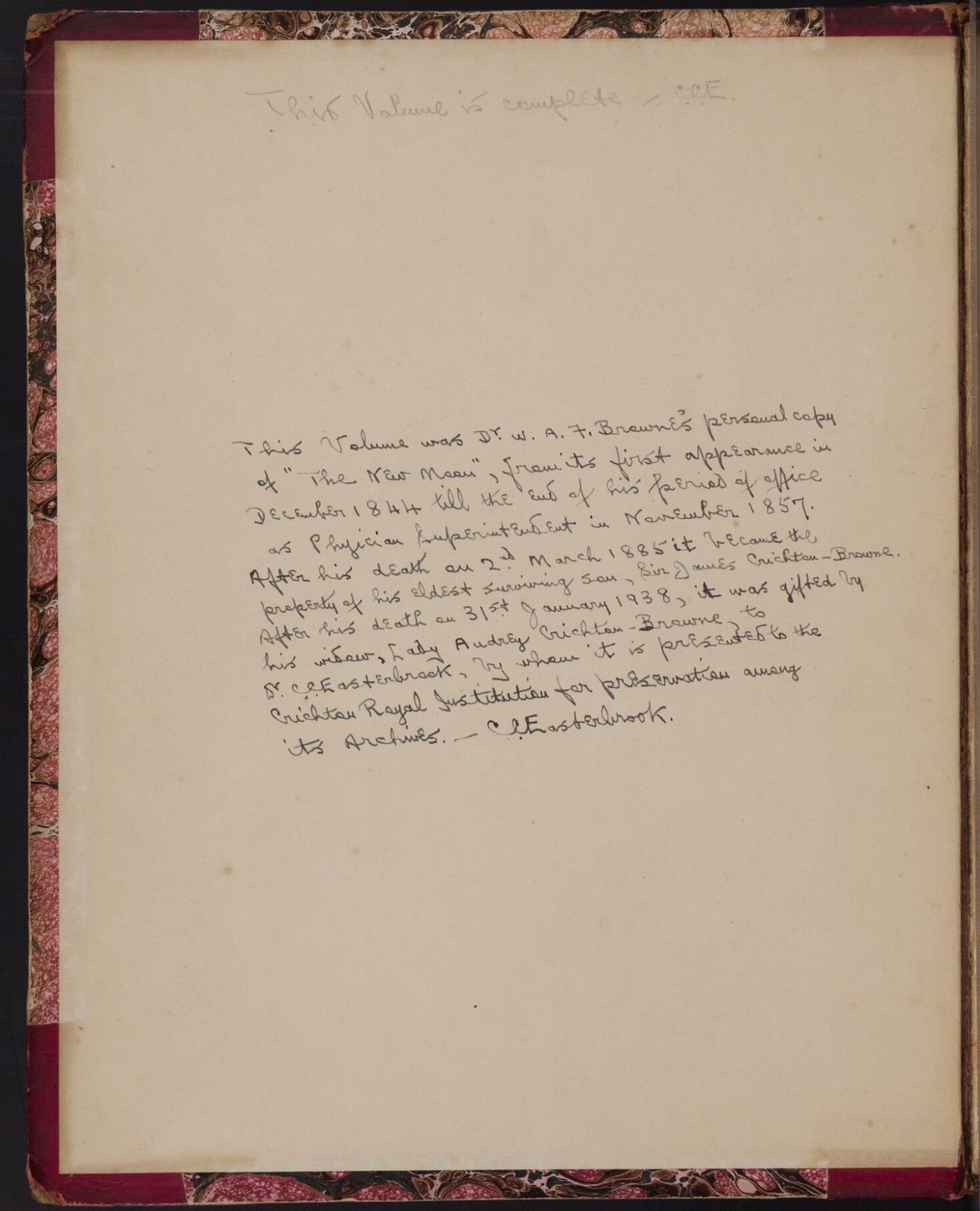
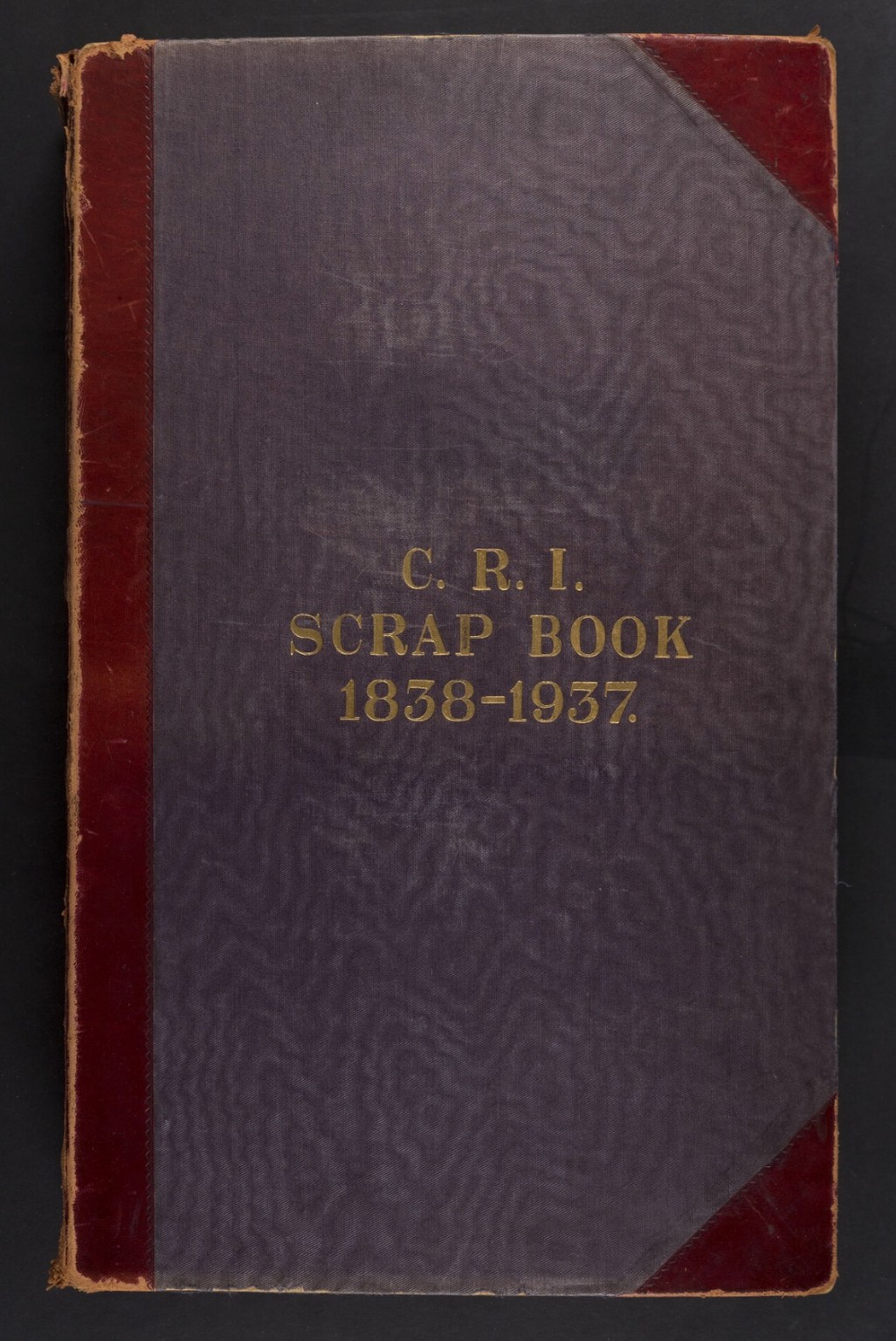
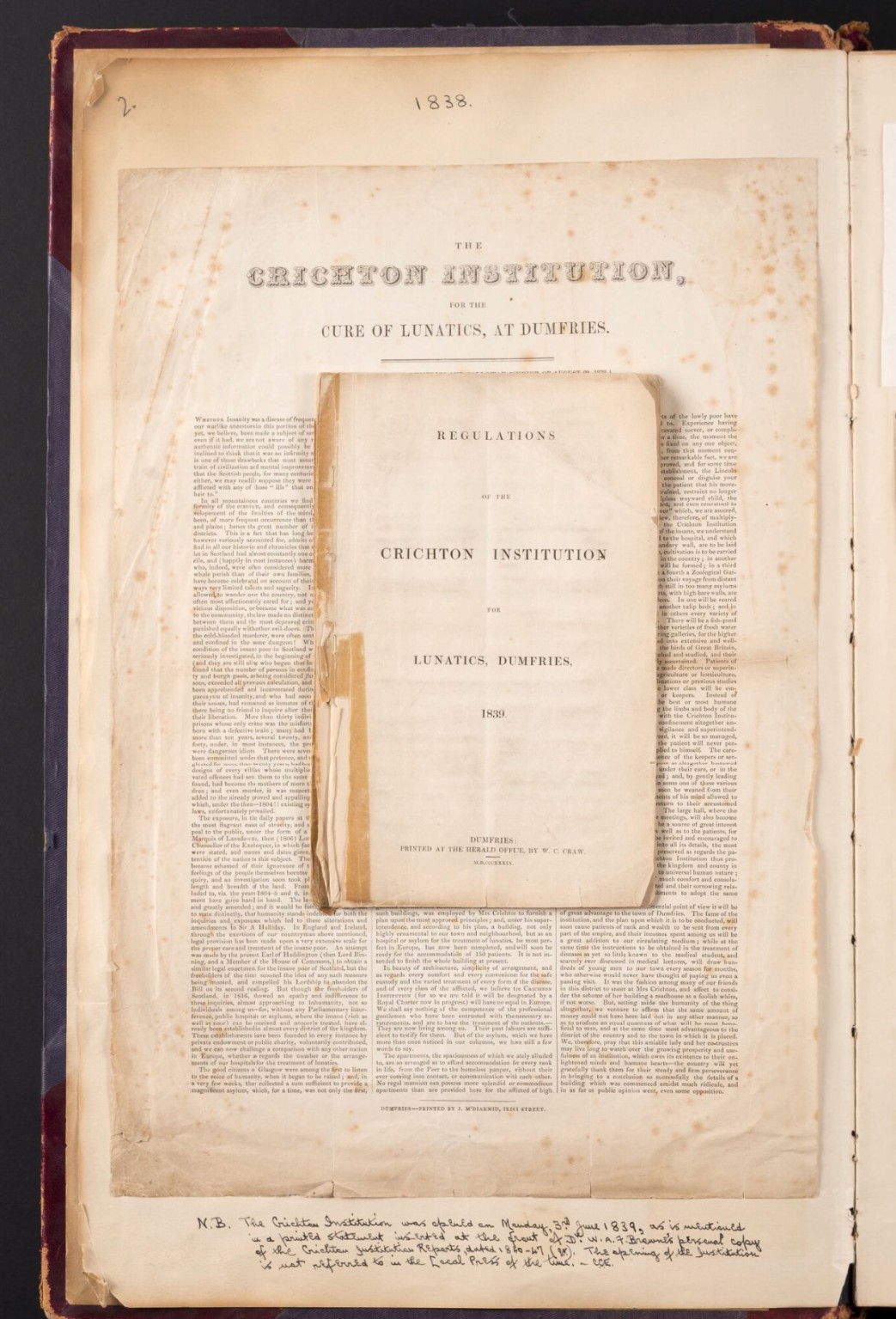
Crichton Royal Institution Scrapbook, 1838 – 1938 (600 pp including several multi-page booklets)
This document complements The New Moon, illustrating how Browne and Gilchrist, supported by the Trustees, and respectful to patients’ individual interests and needs, implemented innovative creative practices in mental health care. Not a scrap book of newspaper cuttings, as the title might suggest, this is rather a unique bound volume of over six hundred historically significant items (939 image pages) arranged chronologically.
It contains the first Library Catalogue made by patients in an Asylum, compiled in the early 1850s, programmes for multiple dramatic productions by patients, starting with the first play ever performed in an Asylum by a wholly patient cast and crew: Raising the Wind (6th and 13th January 1843), programmes for musical concerts, entertainments and sports.
Early Patient Artwork (1843 – 1867), 134 documents
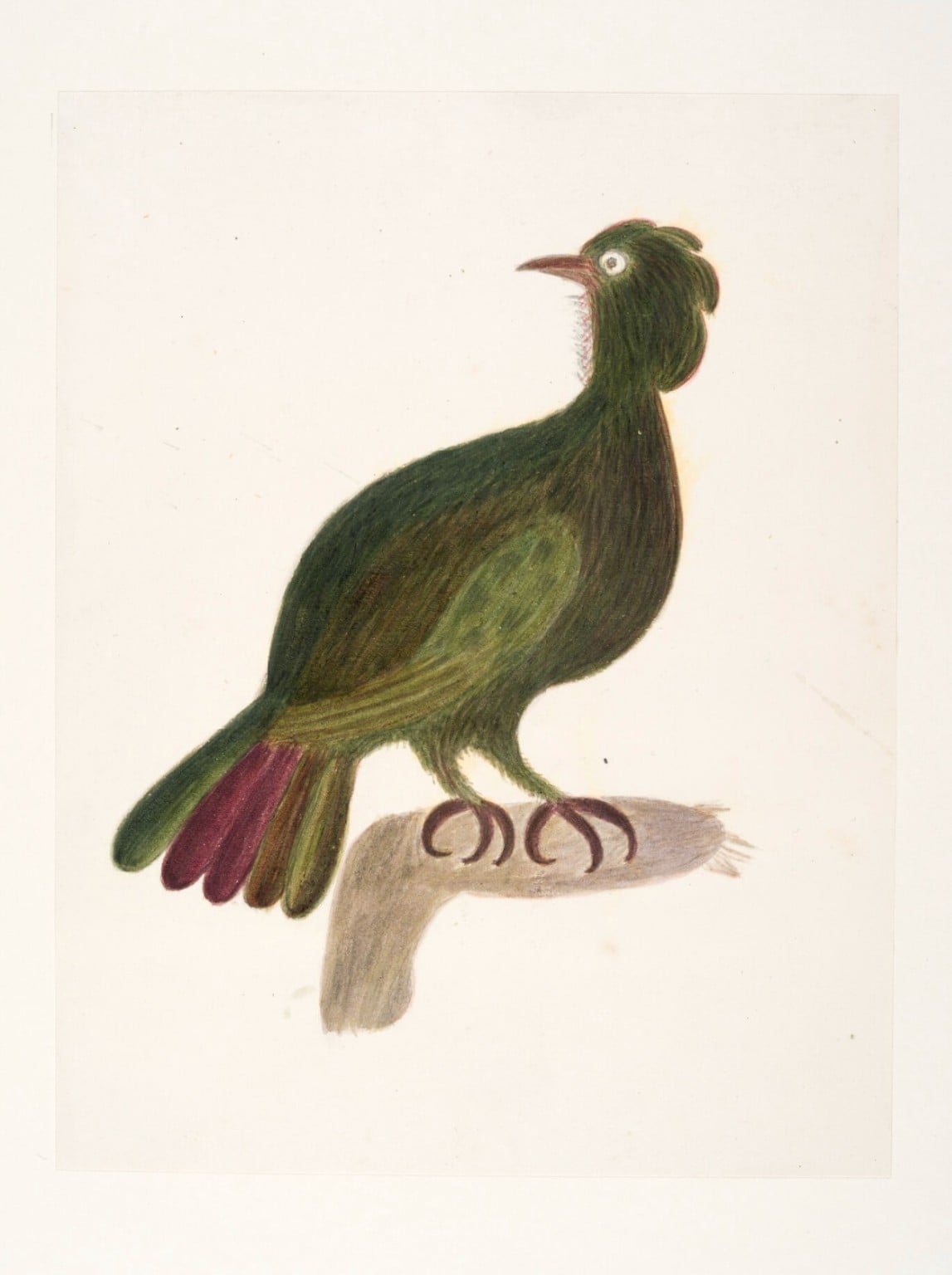
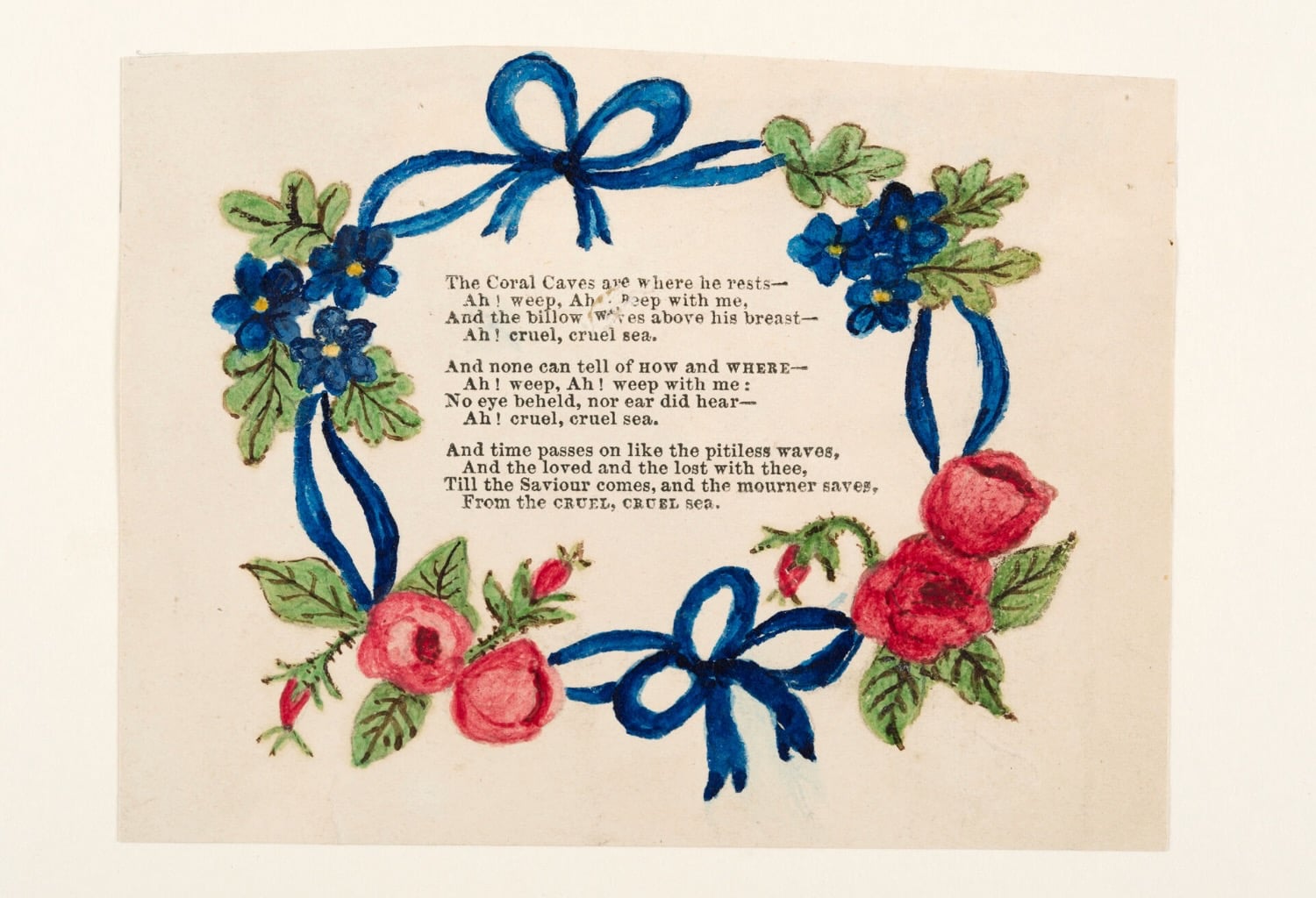
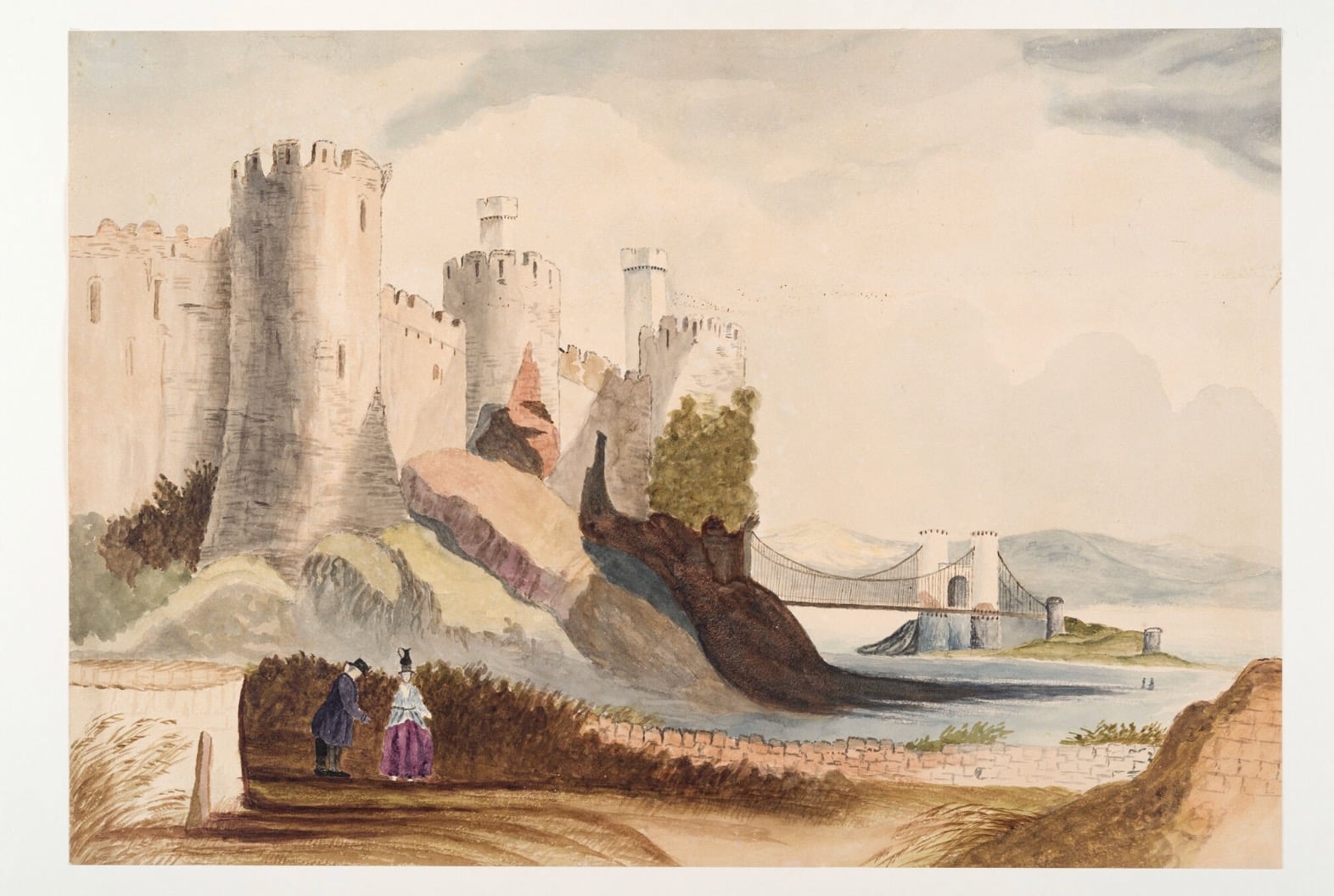
This set consists of patients’ sketches and paintings created between 1843 and 1867. They directly document Browne and Gilchrist’s creative therapies, complementing The New Moon and Scrapbook sets. The artwork is part of a distinctive, creative therapeutic process which paved the way for the establishment of art as therapy in its modern sense
The artworks illustrate and explain the innovative therapeutic approaches adopted in the first forty years of the CRI. Reference to the impact of art practice can be found in patient casebooks. Engagement with art was actively encouraged and used for occupational and educational purposes. Art was woven into everyday activity of asylum life including art classes, visits to external exhibitions, design of playbills for asylum productions and used to decorate the interiors.