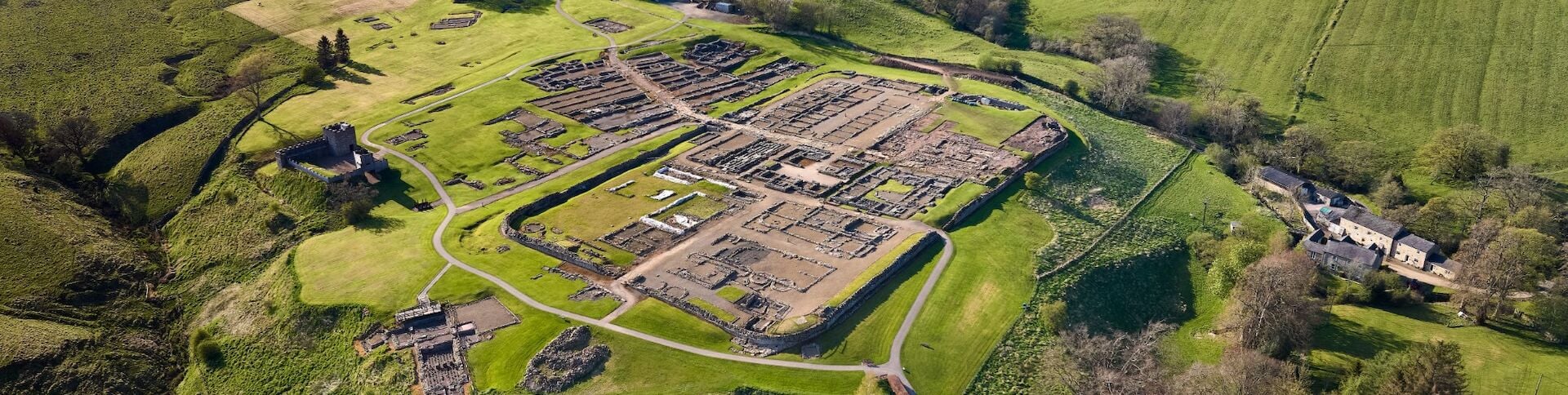
Building on research undertaken through the UK National Commission for UNESCO and DCMS-funded Climate Change and UNESCO Heritage project, the report responds to growing evidence that longer periods of drought, combined with more frequent extreme rainfall events, are destabilising the anaerobic conditions that have preserved Vindolanda’s internationally significant organic remains, including Roman writing tablets, leather shoes, textiles, wood and bone. These changes challenge long-standing assumptions that buried archaeological material is necessarily safe if left in situ.
The pilot brought together the Vindolanda Trust, Kassandra Srl, Newcastle University, the Hadrian’s Wall Partnership Board and the UK National Commission for UNESCO to test Kassandra’s Integrated Decision Support System. The approach uses digital twin modelling, climate data, environmental monitoring, geospatial datasets and generative AI to assess current resilience and explore future climate scenarios. At Vindolanda, the model drew on open-source data, including LiDAR, hydrology, weather and UK Climate Projections, alongside site-specific monitoring data from sub-surface sensors recording soil moisture, pH, temperature, oxygen and groundwater levels. The pilot produced resilience modelling for archaeological deposits, site infrastructure, facilities and natural resources, and tested how adaptive policy pathways could support better long-term management.
The study concludes that Kassandra’s methodology offers a promising tool for helping heritage managers move from reactive crisis management towards more proactive, evidence-based climate adaptation planning. While Vindolanda was the focus of the pilot, the report argues that similar climate threats are likely to affect other sites across Hadrian’s Wall, including coastal, river valley and upland locations. It also suggests that the approach could be applied more widely across large, complex UNESCO designations, including North Devon Biosphere Reserve, Fforest Fawr UNESCO Global Geopark and other landscape-scale World Heritage Sites. In doing so, the report positions UNESCO sites as practical “landscape laboratories” for testing new ways to manage climate risk, protect heritage and support more resilient places and communities.